La planification familiale après le diagnostic d'une maladie rare chez un enfant

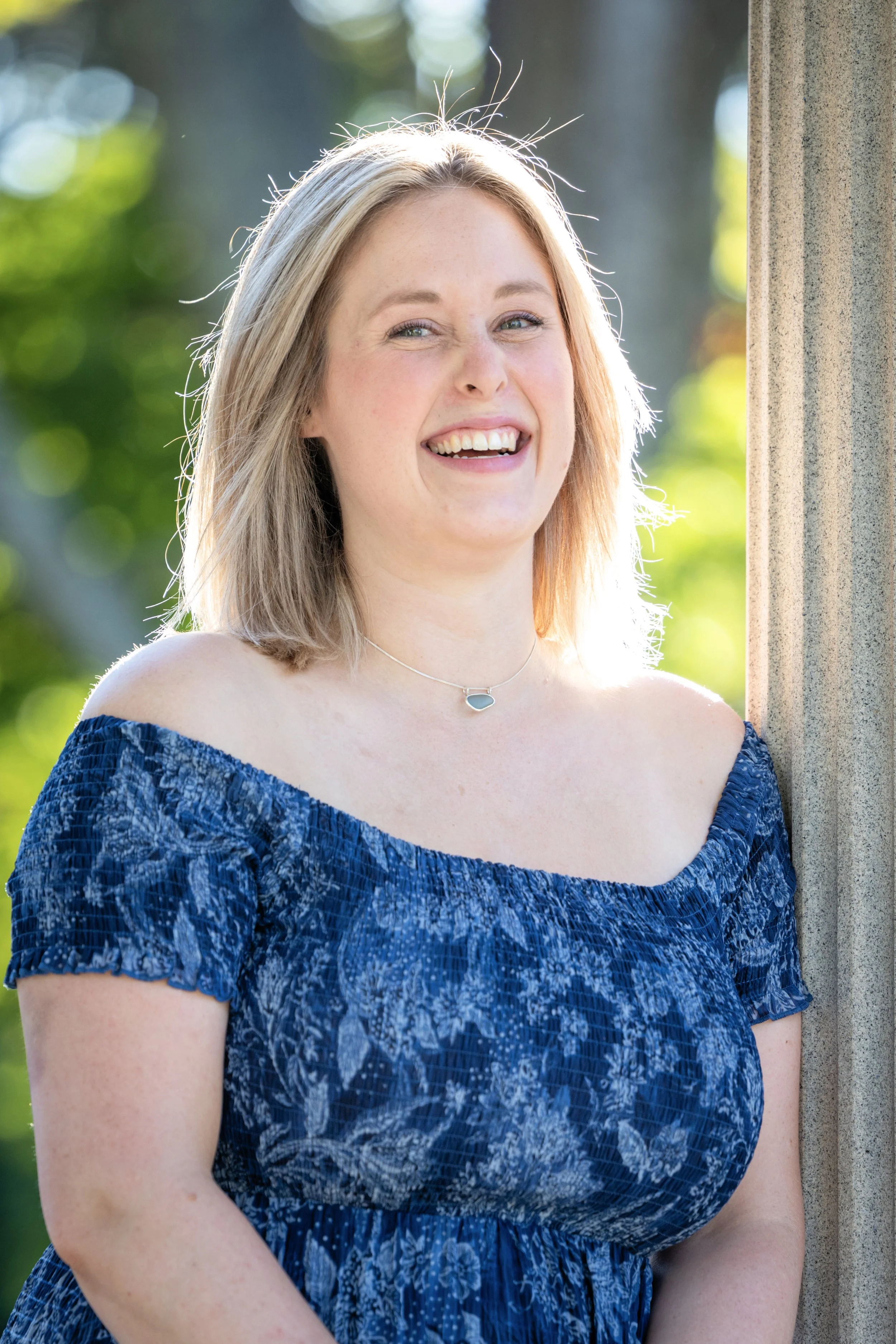
Par Laura Will
Opaque, a future like dirt
inert but teaming with potential
I squint as if I could see
as if all the plotting
could control what creation sprouts
Meanwhile, I reach over the mattress to pinch
the fabric and below it back across itself
as it becomes a landing pad
for my little gymnast attempted somersault
Today I will fill up the gas tank,
pack school lunch, meet a deadline,
fold and scroll,
type, scribble, pick,
and sigh as I pull my fingertips along the earth
finding space enough
for one more seed
Quelques minutes après avoir appris que notre petit garçon souffrait d'une grave malformation cérébrale, j'ai signé en tremblant un formulaire de consentement intitulé "Dépistage génétique de la malformation cérébrale". Relation avec le patient : Mère. On nous a dit d'attendre les résultats dans les huit semaines. Les résultats étaient normaux, aucune anomalie génétique connue n'a été identifiée. Cela fait maintenant deux ans, et nous restons dans l'incertitude. Nous avons effectué tous les dépistages génétiques disponibles en clinique, soumis les génomes à trois groupes de recherche, et nous n'avons toujours pas de réponse à la question qui se pose : pourquoi ?
We have sought out second opinions and third opinions. The doctors say, “It looks genetic.” Something about how uniformly imperfect our son’s brain is indicates it is most likely written into his genetic code instead of being the result of a prenatal blood flow issue or viral attack. However, we have been told by his neurologists, by our geneticists, and by the researchers, that it was either an ultra-rare autosomal recessive issue or completely de novo. We are told that our risk of having another child with the same condition is either one in four (autosomal recessive) or somewhere between one in a hundred and one in a million (de novo). Most conversations end with furrowed brows and shrugged shoulders.
Alden’s brain malformation is an unsolved mystery. We cannot change the way his brain is formed, but we desperately want to understand it. We want lucidity as we think about having another biological child. And more remotely, we want genetic clarity for our neurotypical daughter, if she ever wants to procreate. If it’s autosomal recessive, there is a fifty percent chance that she has one faulty copy of the gene that has so dramatically altered her brother’s life. With no genetic diagnosis, there is no way to control the risk or even effectively screen for it prenatally. A future pregnancy journey, for myself or my daughter, would be riddled with what-ifs, extra scans, advanced testing, and perhaps the most challenging of choices.
Dans notre famille, l'amour est infini et la joie est absolue. À bien des égards, nous sommes comme n'importe quelle autre famille ; cependant, alors que nous prenons la décision d'avoir un autre enfant biologique, les calculs sont douloureusement différents. Je me sens accablée par l'incertitude, la possibilité d'erreurs génétiques et la fragilité de la vie.
My hope currently resides with both the Rare Genomes Project in Boston and a research team at the University of Minnesota led by Dr. William Dobyns, who has devoted his life’s work to understanding the genetics of rare brain malformations. We flew out to meet him last July, and he looked at our son and told us he had seen five or six children like our son in his expansive career. These other patients could offer valuable genetic comparisons. Dr. Dobyns was almost giddy with the prospect that our son could be a key player in detecting a novel gene important in cortical brain formation. He said, “Get me your genomes, fully sequenced, and I will do all I can to find an answer.” He is our Sherlock Holmes, passionate, forthright, and blindingly intelligent. This began another odyssey that continues to this day.
The team sequencing our genomes is The Rare Genomes Project at MIT/Broad Institute in Boston. They received our blood samples in June 2021, and I not-so-patiently waited, calling each month for updates. I wonder if they can hear my biological clock ticking as loudly as I can. June 2021: “Yes, we received your blood samples.” July: “No updates.” August: “No, we have no updates”. September: “Please be patient.” November: “The genomes have been sequenced, sign this paperwork for data transfer.” December: “No, the data has not been transferred.” January: “The lawyers still need to review some paperwork.” Each time I picked up the phone to call, I was filled with grief and gratitude. Finally, at some point in February 2022, the data of nine billion base pairs — the codes that made my child, myself, and my husband — was uploaded to the cloud from Boston, and downloaded in Minnesota. Now, Dr. Dobyns’ work can begin. We are told to expect results in a year, or ten, or never.
Meanwhile, the team at Rare Genomes Project continues to work diligently in their ways, running our genome along with the genomes of hundreds of other families through different algorithms, combing the data for structural variants, deletions, and duplications. As new tools of analysis are developed or new genes associated with brain malformations are identified, the genomes will be intermittently reevaluated. Occasionally, a reportable finding is identified, and a family receives a call with information they will never forget. Most families never get that call. Most continue to live undiagnosed. When speaking to a researcher at the Rare Genomes Project, she said the most rewarding part of her work is talking to the families. Those conversations humanize the otherwise de-identified genetic materials. These researchers know that what is scientific data and algorithms to them is life and death to the families they represent.
Having a medically complex child changes a family in many ways - emotionally, financially, and physically. The decisions that come up every day are more nuanced. When I look at my son, I am both joyful and heartbroken. When my husband and I consider another pregnancy, another fragile life, there is no right or wrong decision. But, any decision feels uncomfortable. After our best calculations are complete, there are still many unknowns and no clear timeline for answers. Other questions remain: do we have the bandwidth? And, if so, are we courageous enough?
A propos de Rare Resiliency :
Rare Resiliency est une chronique mensuelle écrite et/ou animée par Laura Will. Cette chronique explore les concepts et les compétences qui jouent un rôle protecteur contre le stress chronique et aigu. Chaque article met au défi et encourage le lecteur à continuer à développer cette force intérieure qui le stabilise face à la maladie et à l'incertitude, à la tristesse et à la joie.